Many of you will
have seen the set of 5 short films that I made with Emma Aylett last
year for the Fell Pony Breeders Association, following Bert Morland,
Bill Potter, Andrew Thorpe, Thomas Capstick, Christine and Alison
Morton. I had hoped to capture as much knowledge as possible, but
soon realised that much of the knowledge we carry is hard to put into
words, even for someone who has spent their life amongst ponies, and
even harder when there is a camera pointing at you. But right at the
end of the filming process whilst interviewing Alison Morton, she
expressed it beautifully. "Sometimes you've just got to live it.
Haven't you?"
And so what I have tried to do with these films is capture a sense of what it is like to breed ponies on the open fell first hand, and to try and capture some of their own ways of handling semi-feral ponies, and hopefully to inspire others to go out and do the same.
Even before starting filming, I was aware that the big story is really about how we preserve the semi-feral herds in the future, and that there is a bigger film to be made. After many weeks of editing the footage I had gathered over the last year, there were many, many shots and pieces of interview that werelittle gems, but I couldn't make fit into the films. I needed a way to turn the 5 shorts into a longer documentary. But short films are an art in themselves, and putting a few shorts together doesn't make a longer film. You need more layers of story to weave the shorter sequences together.
I had also been struggling with the amount of footage I had that was typical wet windy snowy Cumbria, and little of mares and foals in the sun. So I decided to get out onto the fells with my cameras, and this soon became a plan to walk with my camera gear on pack ponies across the Howgills, revisiting the breeders I had already filmed.
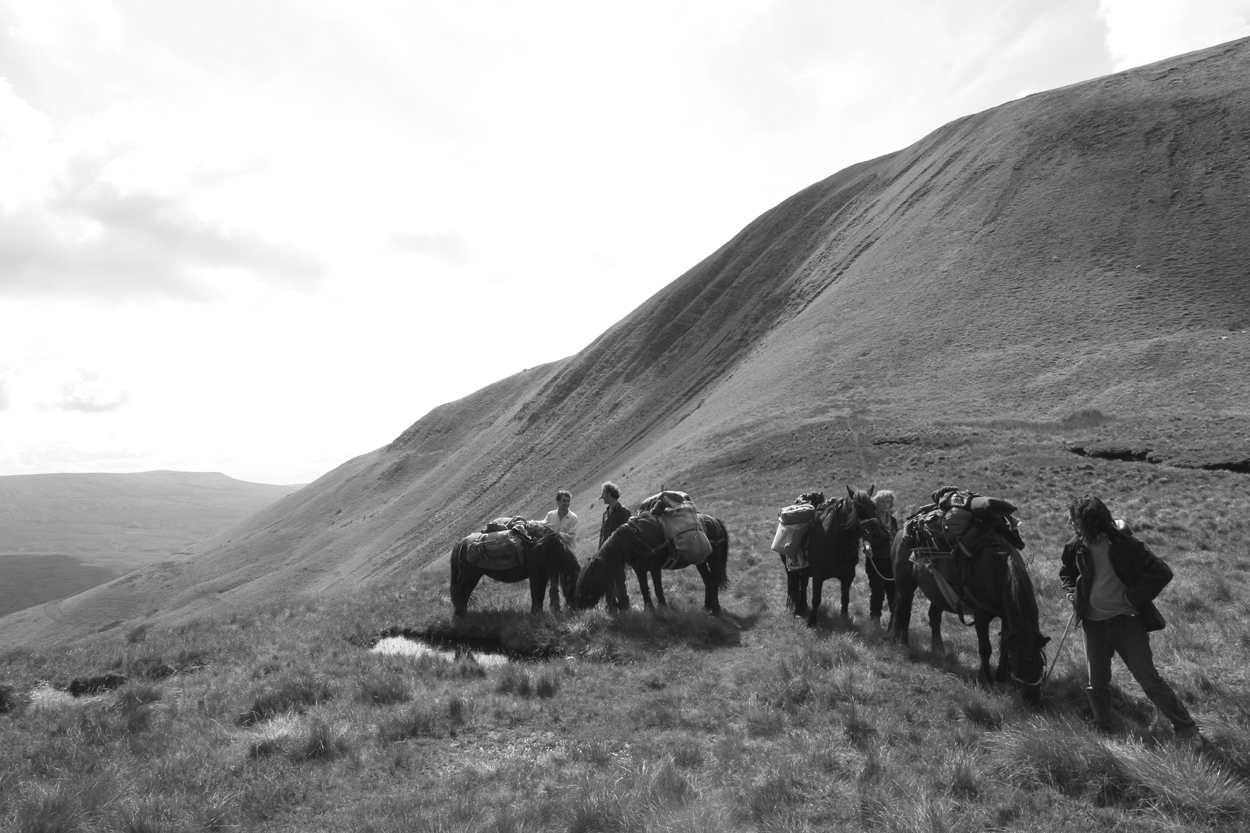
At the end of August 2010, a group of seven of us and four ponies set off from Murthwaite heading up into the heart of the Howgills, with the intention of making it over to Colin and Heather Roberts' Bybeck farm at Tebay.
The first couple of hours we were having to stop every 5 or 10 minutes to straighten and re-tie our loads. We were using an assortment of traditional and hand fashioned packs and bags. Each had their problems. By lunchtime we had made it into Bowderdale. We walked for miles and miles that day. We saw a few ponies, but the mares with foals I suspect were always in the next valley. Camera shy.
A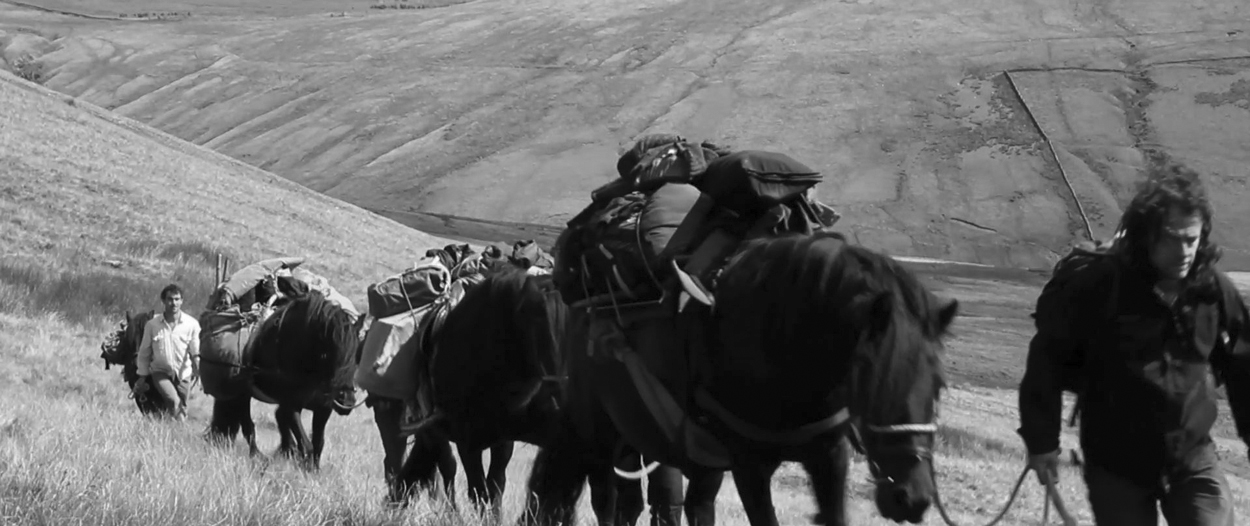
t
the edge of dark we made it to Bybeck where we met up with our wives,
partners and children, and another friend Jonah Maurice with his
young daughter Hester and their 5 year old unregistered fell gelding
Seamus. Jonah had missed the first day as we had thought it too far
and tricky for young children. We were right in that call, but the
next 2 days were easy travelling and we were now 13 adults and 5
ponies.
We left Tebay towards Greenholme. We waded across the Lune, found many beautiful camps on the sides of lanes, and (as always when travelling with horses) were frequently meeting people who wanted to know what we were doing and where we were going.
T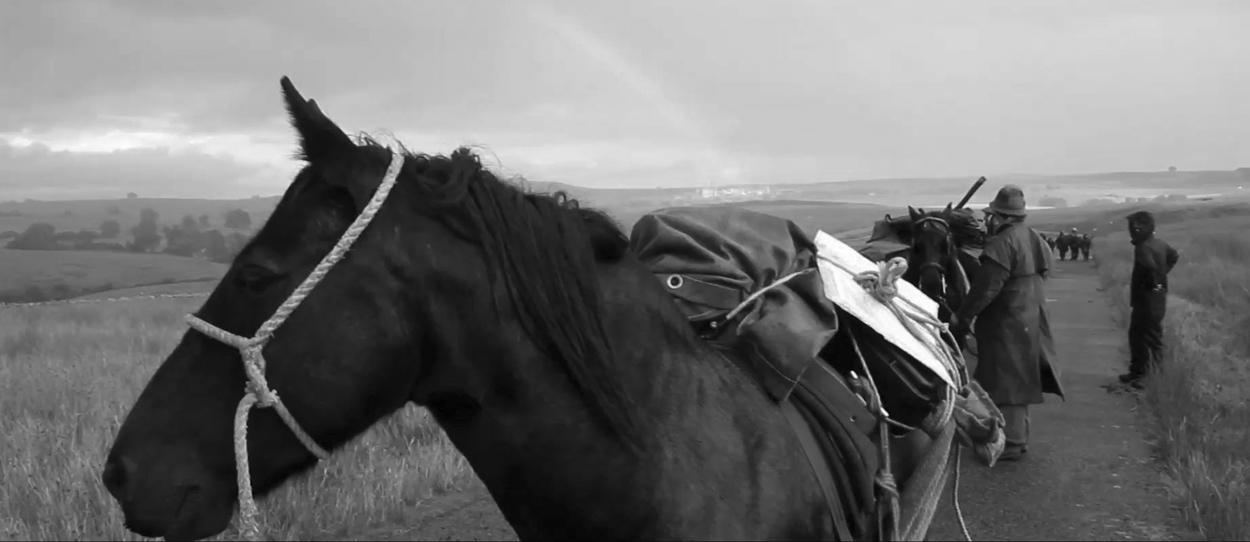
he
third day it rained. Constantly, sideways. But by late afternoon we
had made it to Bampton, where we made camp on the rough common at the
edge of the village and found good food in the pub. Here our numbers
grew again with some friends joining us who I had travelled with from
Cumbria to Cornwall in 1995 with two ponies and a small dray. Our
plan was now High Street, the great old Roman Road. So the 4th day
was just a couple of miles up the slopes to make ready for a big day
ahead.
What can I say about that day? That the weather was perfect? That the ponies were beautifully behaved? That the scenery was awe inspiring? That without fail everyone we passed wished that they were in our shoes? All of the above and much more. I got some great shots that make a beautiful sequence on film.
And now begins the ever so slow process of trying to weave a bigger story. What I am hoping to do with the footage now is open it up to look at what we might do now to help preserve the semi-feral herds. We all know that the breeders are an ageing population, and for someone to start a new herd would require not only the will, but the finances to buy a farm with fell rights. It is not that there is no-one who has the desire to take on or start a new herd, but we need to see the big players round the table, talking and planning to make it easier to be able to get access to the fells, farms and rights.
My own view is that we should see DEFRA and the National Park round the table alongside the FPS and hill breeders. If we could at least establish one herd that is subsidised then someone could be paid a wage to manage it on a long term basis. It would not have to be a huge income if for example the National Park could provide a farm with fell rights and enough land to make a go of it. That way, while other herds may reduce in numbers or disperse completely, wewill have had the vision to maintain at least one semi-feral herd as part of our heritage. Many of the existing Fell pony hill breeders also have a stock of hill sheep on the open fell. Perhaps a subsidised herd could combine with a flock of sheep?
I can't say I have all the answers, but I am aware that if we are to preserve semi-feral herds for our future, we must start to act now.
Tom Lloyd, January 2011